

Pittsburgh
The Point, The Pirates, The Plays


We’ve made a point of visiting US cities the past few years. In light of recent events, I’m grateful we’ve seen as much as we have. Sometimes this country seems on the brink of civil war.
We like taking tours from local guides when we visit a city new to us because we love hearing stories from folks who live there. Our guide on the Best of the Burgh Walking Tour told us her family has always lived in Polish Hill, one of Pittsburgh’s 90 neighborhoods. She explained that it’s important to Pittsburgh dwellers to know which neighborhood someone is from.
My husband asked if the neighborhoods all have a bakery, meat shop, church, and drug store. We’ve admired in this in other cities. Our guide sighed. “They used to,” she said. “But things are changing.”
Pittsburgh has been through many changes.
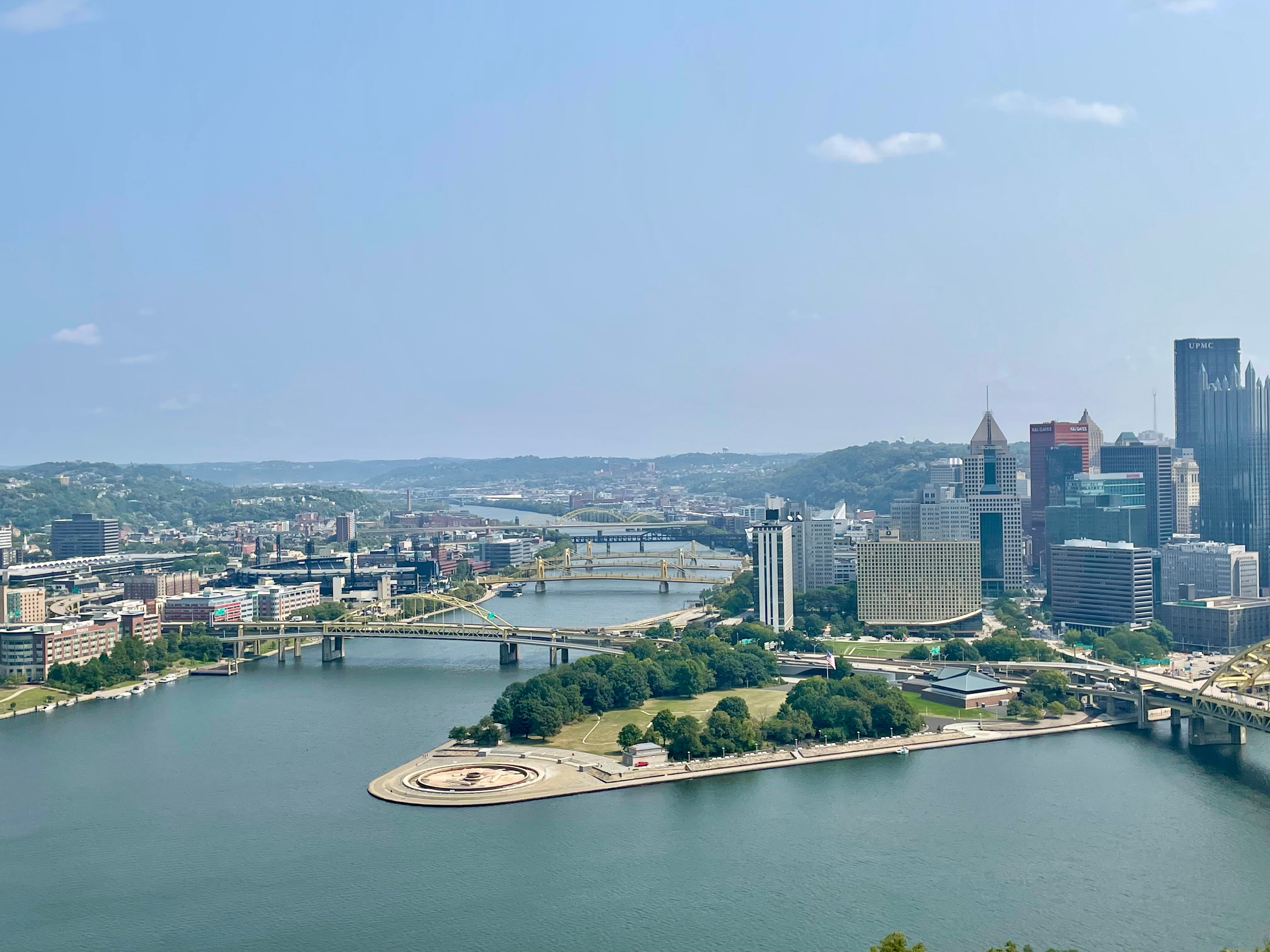
The Point
As early as 19,000 years ago, the people of the Monongahela, Hopewell, and Adena tribes inhabited the region where the Allegheny and the Monongahela Rivers join to form the Ohio River and eventually the mighty Mississippi. European colonizers recognized the strategic location of “The Point” early on.
Pittsburgh was located in the middle of one of the most productive coalfields in the country and was also rich in petroleum, natural gas, lumber, and farm goods. Production of steel began in 1875, and Pittsburgh quickly became the steel capital of the world. Steel production ramped up during World War II, polluting the rivers and the air quality. Some folks still refer to Pittsburgh as “hell with the lid off.”
Up through the mid 1950’s Pittsburgh was the eighth largest city in the US, with 677,000 residents. But in the 1970s, foreign competition, outdated technology, and economic shifts undercut Pittsburgh’s advantage. People lost their jobs and abandoned their homes. The city ran out of money. Pittsburgh’s reputation got worse.
The population of the city Pittsburgh is now around 300,000, “which makes it feel like a small town,” said our guide. For perspective, the city of Anaheim, California has 345,000 residents.
Thanks to a heavy investment in education, Pittsburgh is now a tech and medical research center, responsible for innovations like the polio vaccine, organ transplants, and EMT/paramedic services.
It’s also only the only city in the United States in which all the major professional teams share the same primary colors. Which means Pittsburghers’ wardrobes are pretty much all black and gold.


The Pirates
We love to go to baseball stadiums when we travel and, on this trip, we were able to see the Dodgers get swept by the last-place-in-their-division Pittsburgh Pirates. No matter, PNC park is beautiful, accessed by walking over the Roberto Clemente bridge. There’s a view of the city across the river from just about any seat.
And it was one-dollar hot dog night.
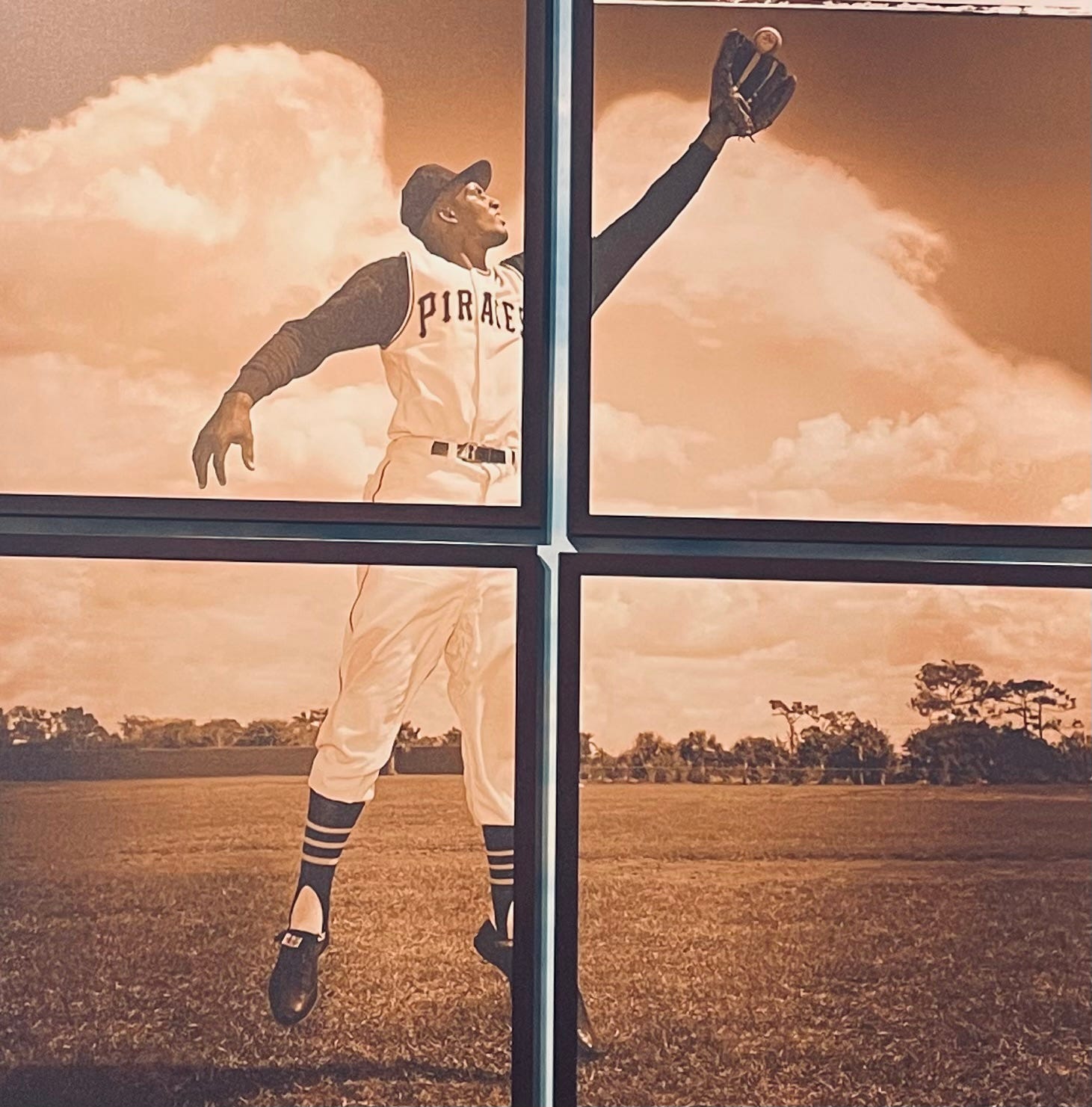
We took a tour of the Roberto Clemente Museum the next morning. Clemente was from Puerto Rico and played for the Pirates from 1955 until his tragic death in 1972. Our guide for the museum was a native Pittsburghian, who played right field as a child and wore number 21 because Clemente did. She even copied the way he stepped up to the plate.
She teared up when she told us about Clemente’s death, in a plane crash on New Year’s Eve when he was personally flying supplies to a victim of a massive earthquake in Nicaragua because their president was stealing the donations Clemente had already shipped and selling them on the black market.
What kind of president would do that?
Clemente was treated terribly by the sports press and fans in Pittsburgh when he first joined the Pirates. Sportswriters made fun of his accent. Pittsburgh still had colored water fountains. Clemente couldn’t eat with the team. When they traveled, he couldn’t stay in the same hotel.
Thanks to Clemente’s career batting average of 317, his 3,000 hits, 240 home runs, twelve Gold Glove awards, and two World Series championships, he eventually became a home-town hero.
The negative of the “Angel Wings” photo above, taken around 1960 by Jim Klingensmith of the Pittsburgh Post-Gazette, was recovered from a trash container in 1991 and stored in a box for seven years. It’s now on display at the Clemente Museum.
A new documentary “Clemente” releases Friday, September 12th, which is also Roberto Clemente Day.
The Plays
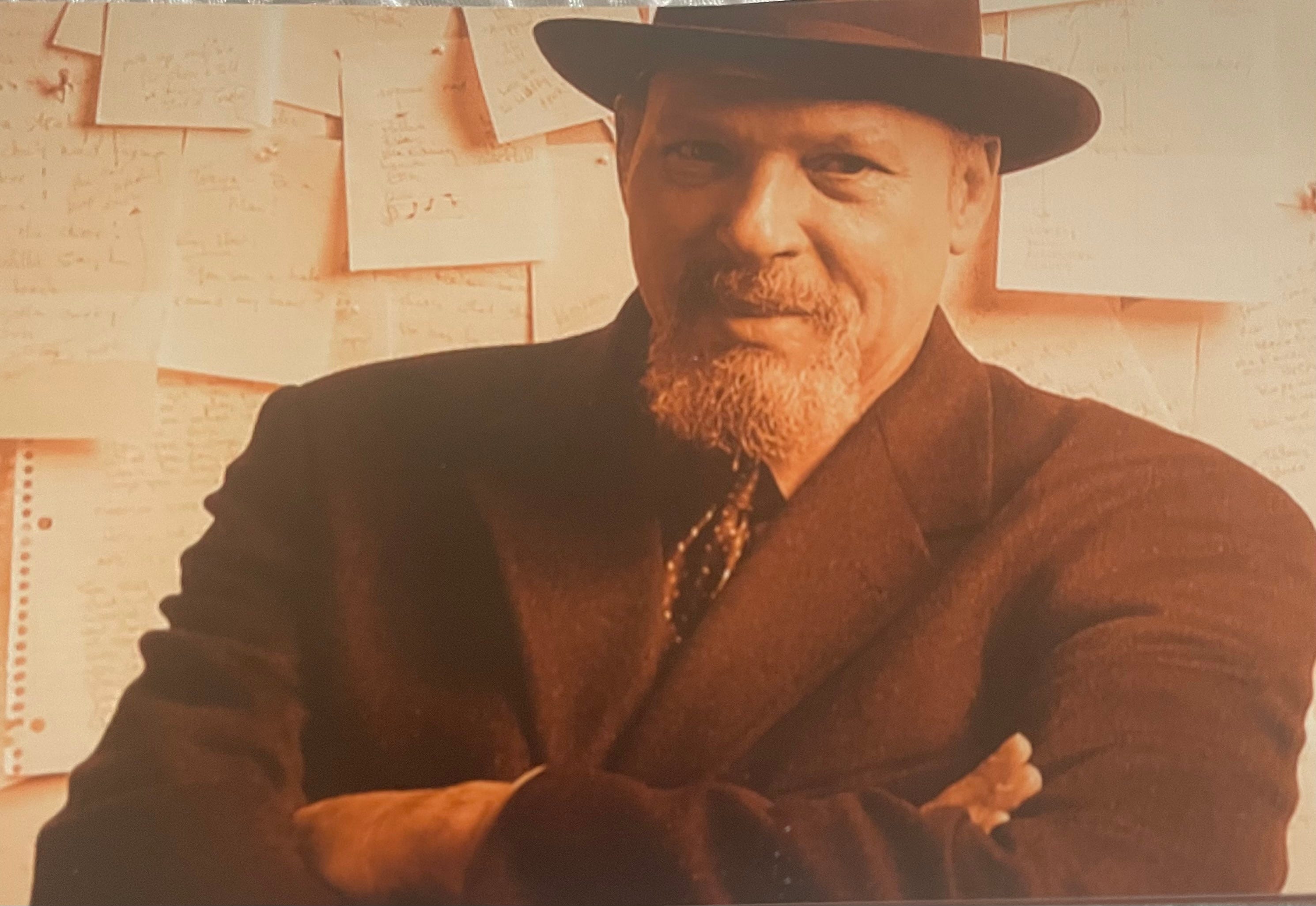
Pulitzer Prize winning playwright August Wilson was also a native Pittsburgher. He grew up in the Hill District neighborhood. His ten American Century plays span each decade of the twentieth century. Our local theatre South Coast Repertory has produced five of Wilson’s plays and we are big fans.
We didn’t manage to catch a Wilson play in Pittsburgh, but we did tour the August Wilson African American Cultural Center. Our guide had seen even more of Wilson’s plays than we have so far. She told stories about Denzel Washington and Viola Davis filming the movie version of the play Fences in her neighborhood.
The technology at Writer’s Landscape Exhibit at the center is amazing. Wave your hand over the Bessie Smith record on August Wilson’s desk and you immediately learn how the blues influenced Wilson. There’s a section for each of the ten plays that includes video excerpts of Wilson’s plays and movies, information about what was going on during the decade represented, and artifacts from the play. It’s very well done.
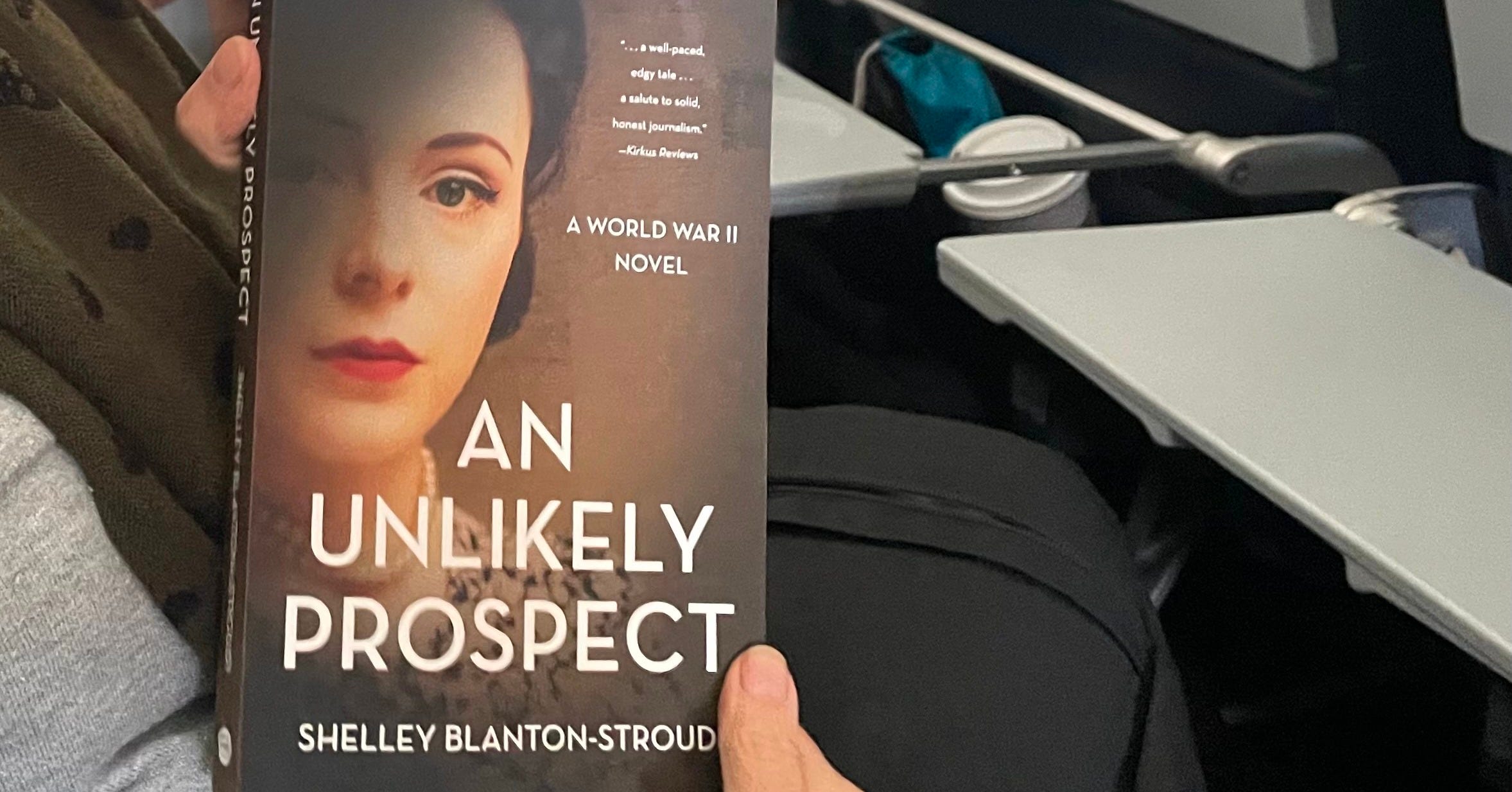
Also very well done is Shelley Blanton-Stroud’s latest release “An Unlikely Prospect” which I devoured on the plane ride from LAX to Pittsburgh.
Based on a little-known event in San Francisco, World War II has just ended, and the city is celebrating. But the revelry takes a dark turn, resulting in eleven deaths and at least six rapes. Sandy Zimmer, the thirty-two-year-old recent widow and brand-new publisher of the Prospect newspaper, decides that her paper will investigate even though her controlling father-in-law, the newspaper’s board, and military and city authorities want to bury the story.
At first, Sandy, overly eager to please, just wants to make everyone happy in hopes that they will like her. In 1945, journalism was a male-dominated world and Sandy must learn to navigate the politics, the power dynamics, and the often-paralyzing gender roles. She eventually grows a spine and finds her own voice.
If only journalists today would do the same.
This is a smart, timely story with a lot to say about integrity in journalism. I especially admired Blanton-Stroud’s character development in her protagonist. Sandy Zimmer is a woman to root for.
I’m such a fan of Shelley’s work that I somehow bought two copies of the book. If you’d like to take one of them off my hands, write back and tell me your favorite August Wilson play or retell your favorite baseball story.
More about Pittsburgh in future newsletters.
Wow, nice job, historian Mary! I found your info fascinating (good photos, too), and was saddened to learn the crummy treatment accorded Clemente. (Do you know the name of the man who did the cheating?) I saw Fences, too, but at SCR. I took my class of English Stoonts with me.
Finally, or first of all, that's quite a shot of my Neighbor Riley! Hilaire. . . --Chuck
Love this trip to Pittsburgh, especially the information on Clemente. I’ll be sure to watch the bio. As for August Wilson’s plays, I saw Fences at the Mark Taper Forum in Los Angeles back in the 90’s. I believe Viola Davis was in the cast and it was excellent! Btw, I’d love to read that fascinating book about the aftermath of WWII in San Francisco. 🩷