

California Winters
And Other Mythologies

There are many misconceptions about California. No one walks here. No one is really from here. Both are clearly untrue.
Folks from other places also like to make fun of Californians for not having weather or seasons when the exact opposite is true, especially this winter. Just before Christmas, Huntington Beach was socked in with fog for a solid week. And then the rains came. We currently have sandbags stacked outside our back patio door.
One of our nephews from the Netherlands arrived for the holidays looking forward to sunny days. We found them in a quick trip to New Orleans for New Year’s Eve, but NOLA was very cold. It was pouring rain when we flew back to California and landed in Long Beach, but a few days later the skies finally cleared.
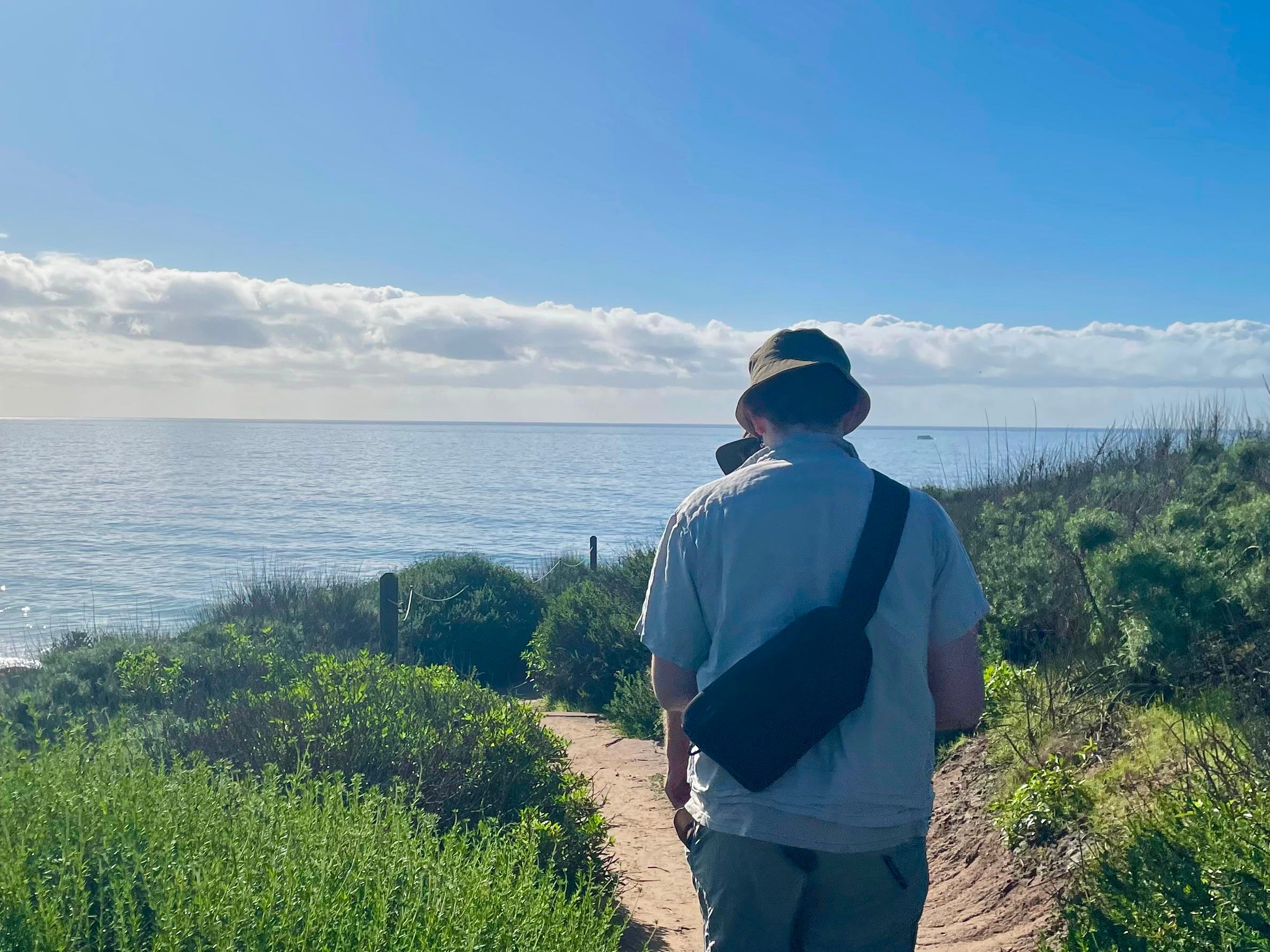
Hosting visitors gives me a chance to rediscover what’s good about living here. We took the kid (actually he’s almost 22) on a small Southern California tour. We ate churros and octopus ceviche from Mercado González in Costa Mesa and sampled seaweed wrapped spicy salmon at Tenori at Rodeo 39 in Stanton. We admired the Christmas decorations at Crystal Court at South Coast Plaza and the art at the Cheech Museum in Riverside.
He jumped in the ocean at Crystal Cove and Seal Beach, walked to the end of the pier in Huntington, and bird watched in the Bolsa Chica Wetlands. He hiked to a point up in Silverado Canyon where he saw Catalina Island.
It was wonderful to get out in the fresh air and admire the green hills around us.
It made me realize I need to get out more.


I drove down to Laguna Beach for the sold out, first annual Laguna Beach Litfest on January 10th. It was a beautifully coordinated event, the venue (the Suzi Q Senior Center) was stylish and comfortable. Lisa Alvarez’s keynote speech was completely inspirational. I started a new poem in Gustavo Hernanadez’s workshop. I ran into so many writer friends that I’d met in a writing classes, workshops, and conferences and was delighted to realize how many of them already knew each other.
I also loved the table centerpieces.
I gave a workshop on Creating Complicated Characters. Since the theme of the festival was California stories, I talked a bit about the place, weather, and seasons of California, which can be another complicated character.
After all, Raymond Chandler infamously wrote about “meek little wives feeling the edge of the carving knife during the Santa Ana winds and then studying their husband’s necks.”
My favorite essayist D. J. Waldie wrote this about the first day of autumn in Lakewood. “It had a different light, more oblique and if anything, slower than midsummer’s light. Perhaps that light makes whole days in this season seem like an interminable afternoon.”
The whole winter day at the Litfest flew by. My workshop went well mostly because the attendees asked such smart questions and were so eager to participate.


“I loved your poem,” a woman said to me last Sunday at my brother-in-law’s memorial celebration. “The sad thing is,” she added, “It could have been written by AI.”
“No,” I said a bit too firmly. It was an emotional day. This brother-in-law was a good man and his death, like too many deaths, was unexpected and painful. The memorial speeches and songs were heartfelt and personal. As was my poem.
Anyone who knows me knows how I feel about AI. This woman did not know me, so I decided she needed further education. “AI can only draw from what it has stolen from previously published works,” I said. “This is something new that I created.”
Again, probably a bit too firm.
She gave me a kind smile. “Oh,” she explained helpfully. “It’s actually really easy. You just plug in the words you want. I used AI to write a Christmas poem for my granddaughter.”
“It’s not the same thing,” I insisted.
“Well,” she said. “It’s a different world. What can we do?”
I detected some frustration in her voice, at the world maybe, or more likely at me. “We can keep reading and writing and making music,” I said. She shrugged and nodded. I was afraid she might argue that AI could write music too but someone else interrupted and she moved away.
Some folks seem to have bought into the mythology that since AI is already here, we might as well just accept it and give up on creating new work on our own. I obviously don’t agree. AI was useful when I shopped for a new dishwasher and clothes dryer. It gave me nice summaries of the pros and cons of different models but I still had to make my own decision about what to buy.
So, what can we do in this new world? Keep reading and writing and making music. And avoid making assumptions.
Here’s a video of me reading the poem.
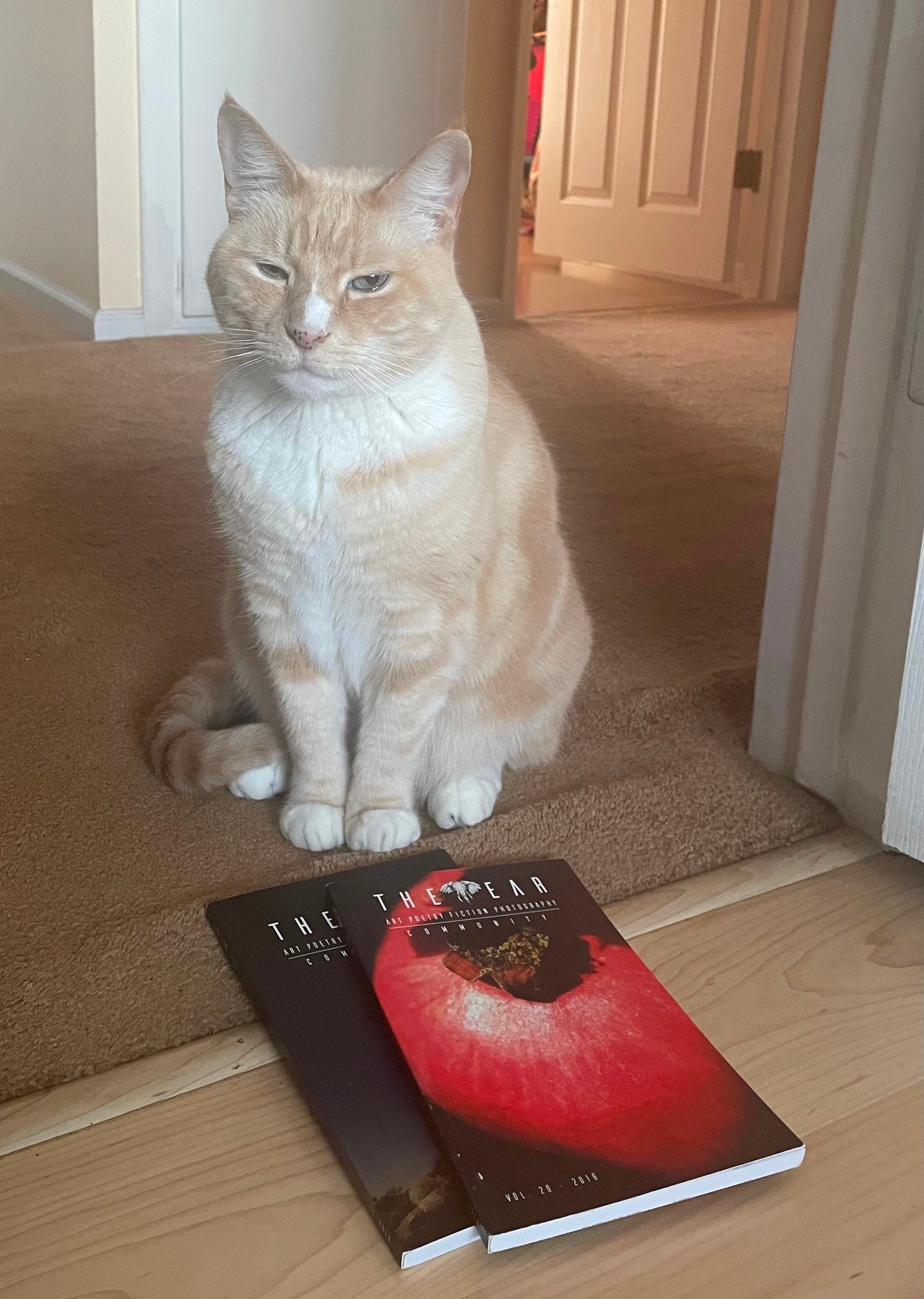
IVC English Professor Kristen Skjonsby and Citric Acid Editor Andrew Tonkovich offered a terrific panel at the Laguna Beach Litfest about Small Press Journals and their role in the Writer’s Journey which made me realize how fortunate I’ve been to be included in The Ear.
I have a couple of past issues to share. One includes a short story by me. If you’d like me to send these to you (US readers only,) write back and let me know some of your favorite literary journals. I’ll put your name in a hat.
I’ve taken to unsubscribing and deleting anyone who suggests that AI is a great tool we can use in our art and learning. I don’t need that kind of negativity as an artist. It’s hard enough trying to get people to believe you drew something by hand. AI is theft.
Oh, that conversation about AI just makes me sad. I had a convo last week with two women who I admire, who are liberal in every way--and surprisingly ignorant about the environmental consequences of AI. All I said was that I refuse to use AI and reject it any time I can, and they became very defensive, saying how helpful it is to them, blah blah blah. I kept my mouth shut and didn't say that in my view, they were outsourcing their intellect, taking the lazy way. Maybe next time...